8000 Series
8021 Aluminium Foil
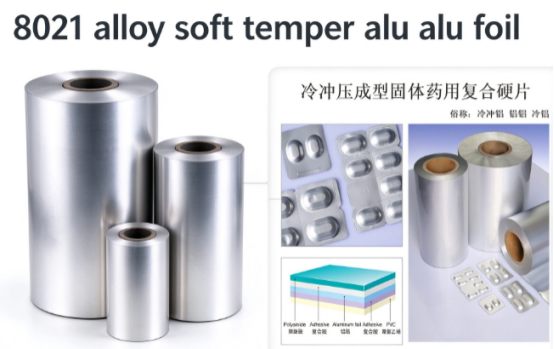
A thin-gauge aluminium foil from the Al-Fe-Si 8000 series, positioned for lidding and retort structures that need more strength than conventional 8011. It is supplied in O and H tempers across 0.006–0.2 mm, where pinhole control and consistent lacquer adhesion matter most. Typical uses include sauce cup lids, yogurt lids, retort pouches and pharmaceutical blister lidding.
Overview
8000 Series · 8021 Aluminium Foil
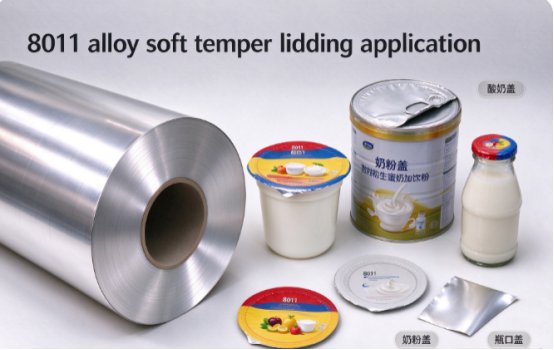
A yogurt cup lid leaves the form-fill-seal line as a single piece of lacquered foil, sealed to the rim of a filled cup and peeled back by hand a few weeks later. Behind that small, ordinary action sits a demanding combination: the foil has to stay flat through lacquering and printing, seal cleanly at the rim, survive the distribution chain without pinholes, and still open with a controlled peel. 8021 aluminium foil is one of the materials chosen for this kind of work.
Starting at the Sealing Line
Lid stock is not judged in isolation. It is judged as part of a sealing system: the foil substrate, the lacquer or sealant layer, the cup rim geometry, and the heat-seal window all act together. 8021 foil is used as the metallic carrier in these builds because it combines adequate stiffness at low gauge with a surface that takes coating and printing consistently. When a converter specifies it, the conversation usually begins with the closure design rather than with the alloy alone.

From there, the practical questions follow: which temper, which thickness, which surface finish, and which sealant chemistry. Answering them in that order keeps the foil choice tied to the application instead of to a catalogue page.
Where 8021 Sits in the 8000 Series
8021 belongs to the aluminium-iron-silicon family of the 8000 series. Iron and silicon are present as the main alloying additions, with the balance kept tight so that the material behaves predictably during rolling to thin gauge. Compared with conventional 8011, 8021 is generally selected where a higher strength orientation is wanted from the same family, particularly in thin sections that would otherwise be prone to handling damage.
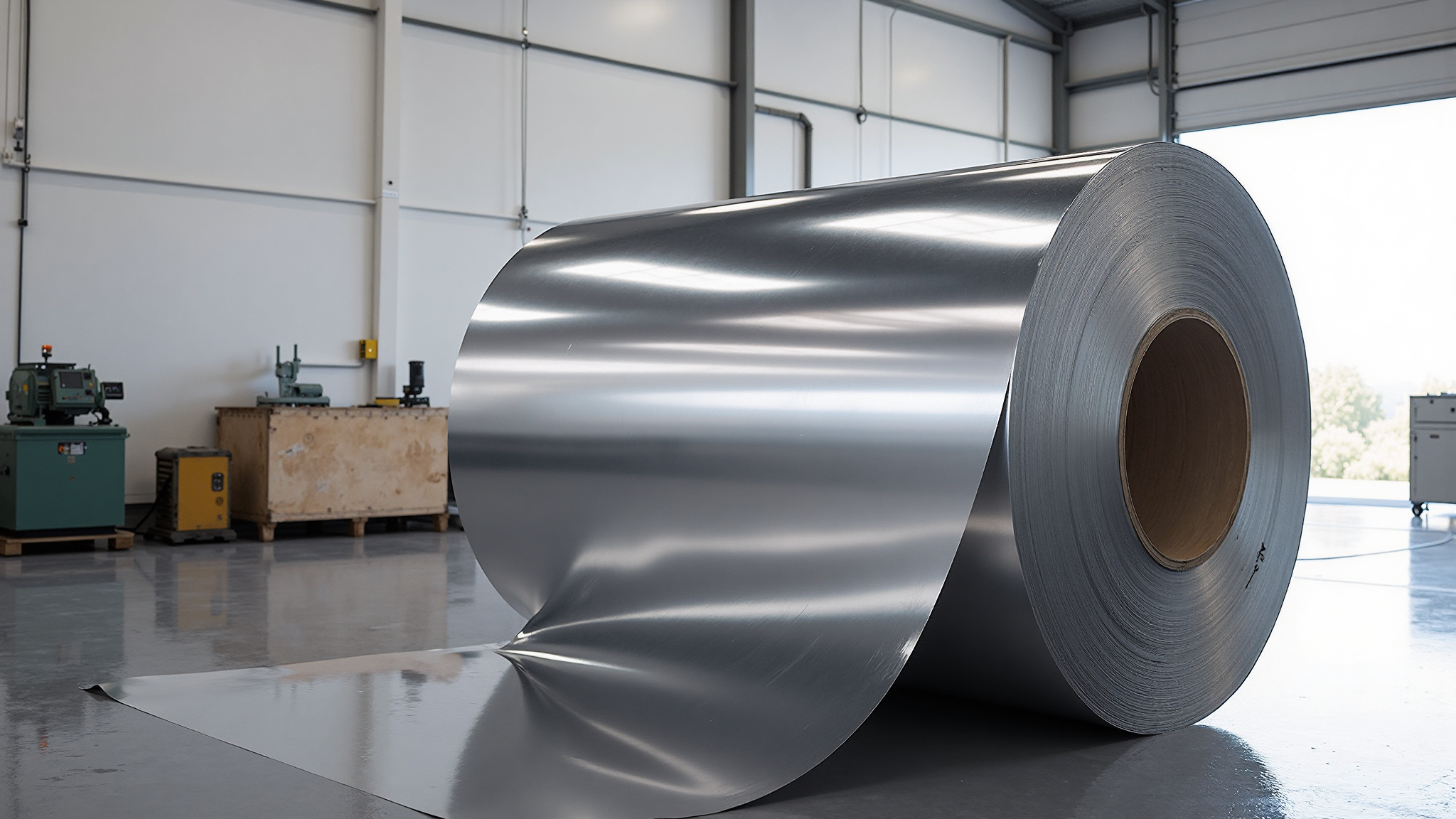
The alloy is supplied in O and H tempers. Soft O temper suits forming and sealing operations that need the foil to conform easily, while the H tempers give the higher strength levels used where flatness and resistance to creasing are priorities. Thickness is available from 0.006 mm to 0.2 mm, covering the very light gauges used for pharmaceutical lidding through to the heavier structures used in retort pouches.
Thin-Gauge Pinhole Control
At the low end of the range, pinholes become the dominant quality concern. A 0.006 mm foil is thin enough that small inconsistencies in the rolling process, or in the incoming metal, can turn into penetrating defects. 8021 is chosen for part of this work because its chemistry and rolling route support a fine, uniform microstructure that helps keep pinhole levels controlled at light gauge.
Pinhole performance should always be read together with the final structure. A foil that passes inspection as a bare sheet can still fail once lacquered, printed and sealed, so converters typically evaluate the finished lid or pouch rather than the foil alone.
Matching the Foil to the Closure and Retort Cycle
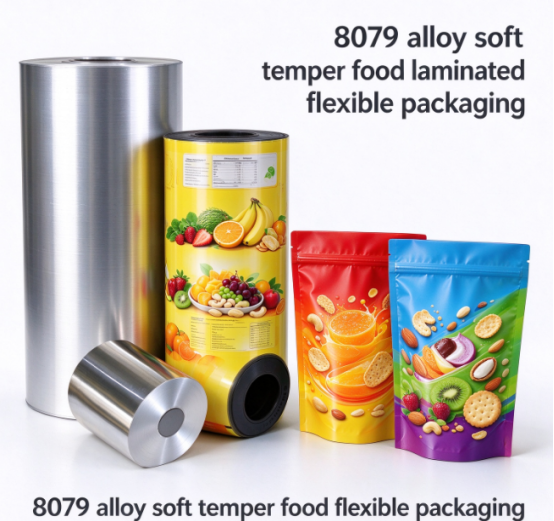
For retort applications, the foil is only one layer of a laminate that may also include a sealant film, an adhesive and an outer polyester layer. The retort cycle, the product chemistry and the required shelf life determine how the structure is built, while the foil contributes barrier, stiffness and dimensional stability through the process. In these builds, 8021 is used across retort pouches and similar high-integrity packaging.
Typical applications for the grade include sauce cup lids, yogurt lids, retort pouches and pharmaceutical packaging. Each of these brings its own sealing and processing conditions, so the final foil specification should be confirmed together with the closure coating, the heat-seal conditions and the sterilization process. That joint review is what turns a general-purpose foil grade into a workable packaging component.
More from this series