8000 Series
8079 Aluminium Foil
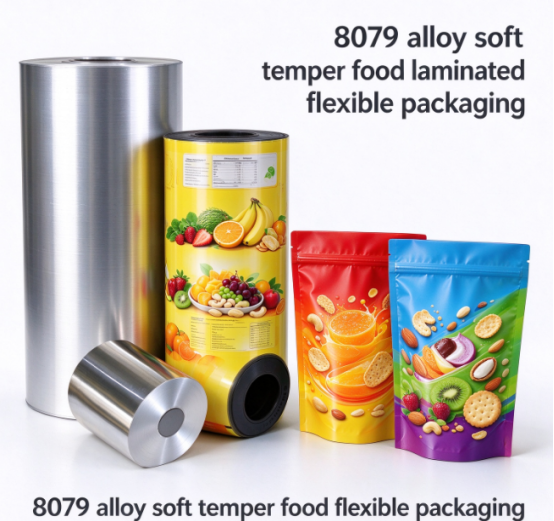
8079 aluminium foil pairs high barrier performance with tight pinhole control at thin gauges, making it a practical choice for flexible packaging, lidding and small-format sachet structures where the foil carries the functional barrier.
Overview
8000 Series · 8079 Aluminium Foil
8079 is the grade to evaluate when a flexible packaging structure has to keep its barrier intact at light gauges. It suits dry food wraps, confectionery twist and flow-wrap, lidding stock and small sachets where the aluminium layer is doing most of the protective work. The appeal is not raw strength but consistency: a clean, bright surface, few through-pinholes and predictable running behaviour on high-speed converting equipment.
8079 vs 8011: what changes
The practical difference between 8079 and 8011 appears as the gauge comes down. 8079 is made to a higher aluminium purity with fewer alloying additions, which gives it a softer temper and a more uniform grain structure. In thin sections that generally means fewer pinholes and a wider, more forgiving forming window, particularly where the foil is folded, creased or drawn tightly around a product.
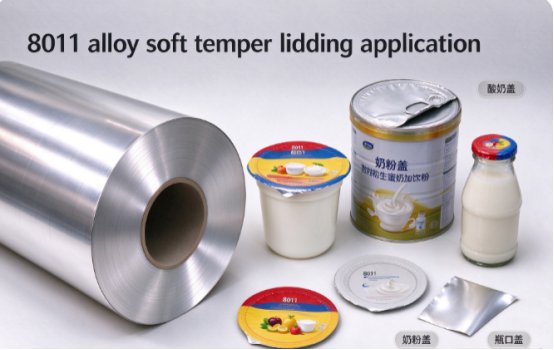
8011 carries more alloying elements for added strength and is widely chosen where a stiffer foil body is needed, such as blister lidding and semi-rigid containers. The trade-off is that at the lightest gauges the rigidity that helps a container can make pinhole control harder to hold. Neither grade wins across the board — the structure, the target gauge and the converting process decide the fit.
- Barrier: 8079 is usually specified where the foil is the primary barrier and every pinhole counts; 8011 is often paired with additional barrier layers in a laminate.
- Pinhole resistance: the softer, more uniform structure of 8079 tends to hold pinhole levels better as thickness is reduced, while 8011 trades some of that for stiffness.
- Surface: 8079 offers a clean, bright finish that takes printing, lacquering and adhesive lamination predictably; 8011 behaves similarly but with a firmer hand in the web.

Gauge and temper
This grade is supplied in the O (annealed) temper across a working range of roughly 0.006 mm to 0.2 mm. At the light end the foil is soft and highly conformable, which helps when it has to follow tight folds or wrap small, irregular shapes. Moving toward 0.2 mm gives a heavier web that is easier to handle on its own and better suited to lidding and semi-rigid applications. Because properties shift with thickness, it is worth confirming the exact gauge against your forming step and the barrier target of the finished pack rather than treating the whole range as interchangeable.

Ordering notes
When enquiring, specify the target gauge, temper, width, core diameter and coil weight, plus whether the foil will be printed, lacquered or laminated so the surface finish can be matched to the next process. Please also confirm the intended end use and any food-contact requirement, as these affect the temper and handling recommended. Tell us your annual or per-order volume and delivery destination and we will come back with a quotation and lead time for the 8079-O specification listed here.
More from this series