1000 Series
1060 Aluminium Foil
Commercially pure 1060 aluminium foil with higher purity and a uniform surface finish. A dependable choice for lamination, electronic components and food-contact processing where consistent appearance and forming behaviour matter.
Overview
1000 Series · 1060 Aluminium Foil
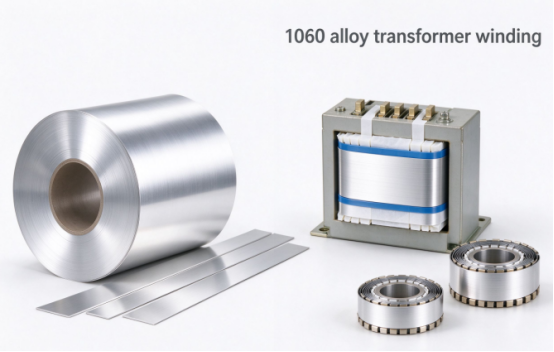
1060 aluminium foil is produced from commercially pure aluminium and is recognised for its higher purity and even surface appearance. The low alloying content gives it good electrical and thermal conductivity, reliable formability and a clean finish that suits downstream converting.
Because the surface is uniform and free from pronounced rolling marks, the foil takes coatings, adhesives and print well. It is commonly supplied in soft and semi-hard tempers so that converters can match the material to the forming operation rather than compromising on the process.
Common applications
- Lamination stock for flexible packaging, where the foil acts as a barrier layer beneath film or paper.
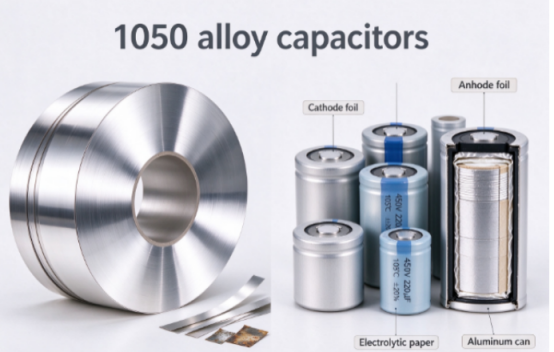
- Electronic components such as shielding wraps, capacitor elements and heat-spreading layers.
- Food-contact processing lines that require a clean, consistent foil surface.
- Insulation facing and duct wrapping in building services work.
- General converting and fabrication jobs where a ductile pure foil is preferred.
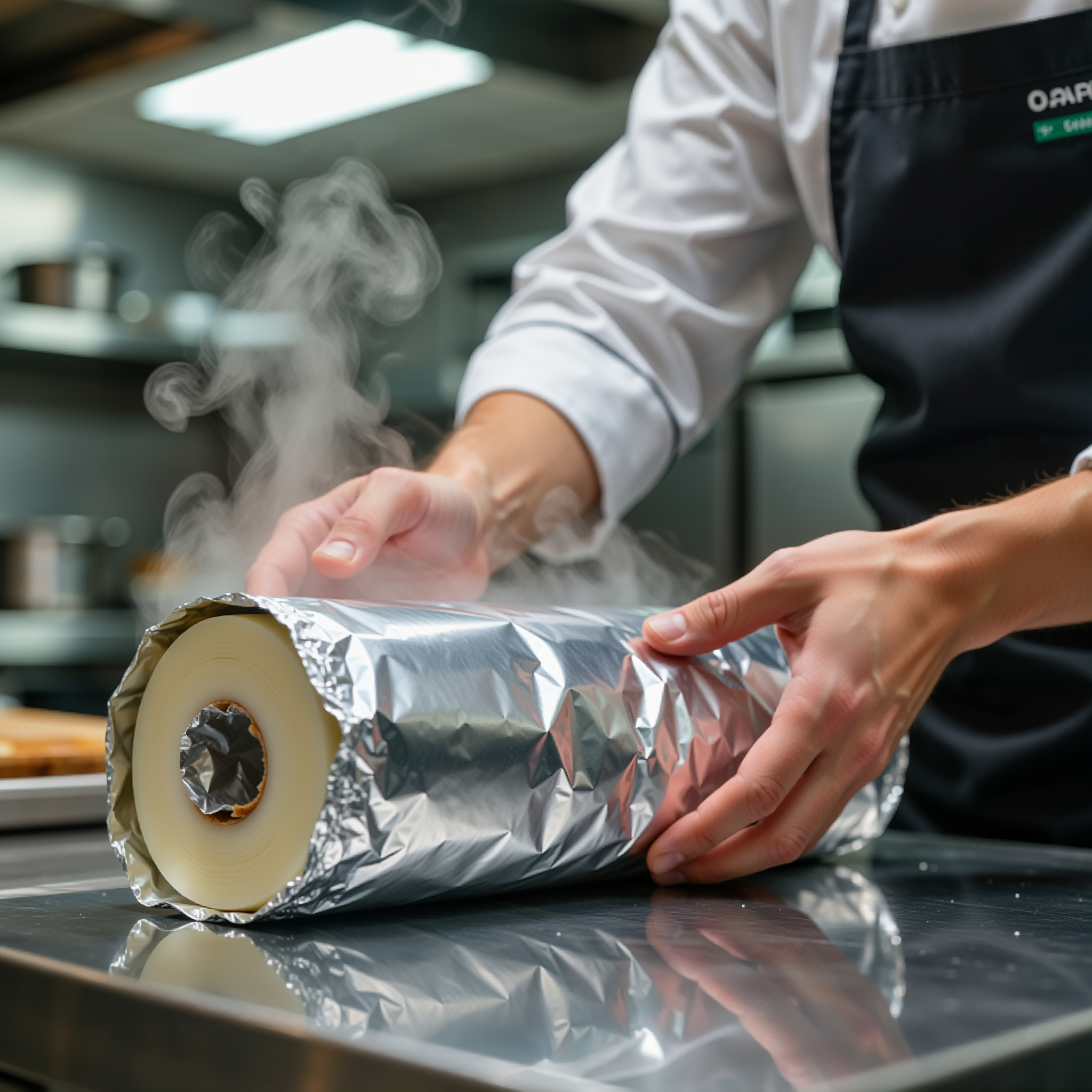
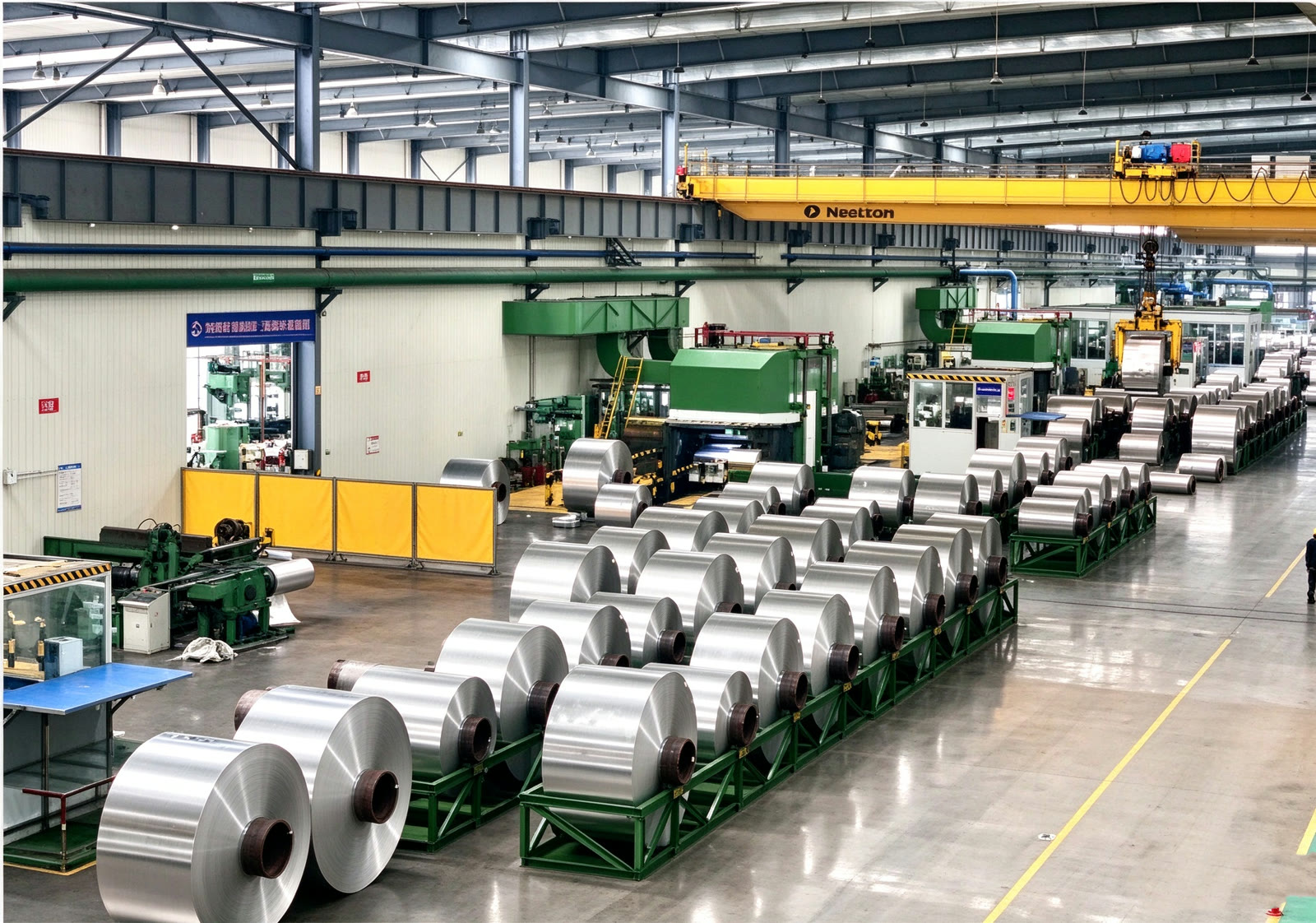
Rolls are wound tightly and edge-trimmed so that they run cleanly through laminators, slitters and forming equipment. The uniform gauge helps keep tension stable across the width of the web.
Temper options
- O (annealed) — fully soft, the most ductile option for deep forming and lamination.
- H14 — quarter-hard, offering a useful balance of stiffness and formability.
- H18 — full hard, chosen where the foil needs to hold shape with minimal deformation.
- H22 and H24 — partially annealed tempers for applications needing controlled strength with residual ductility.
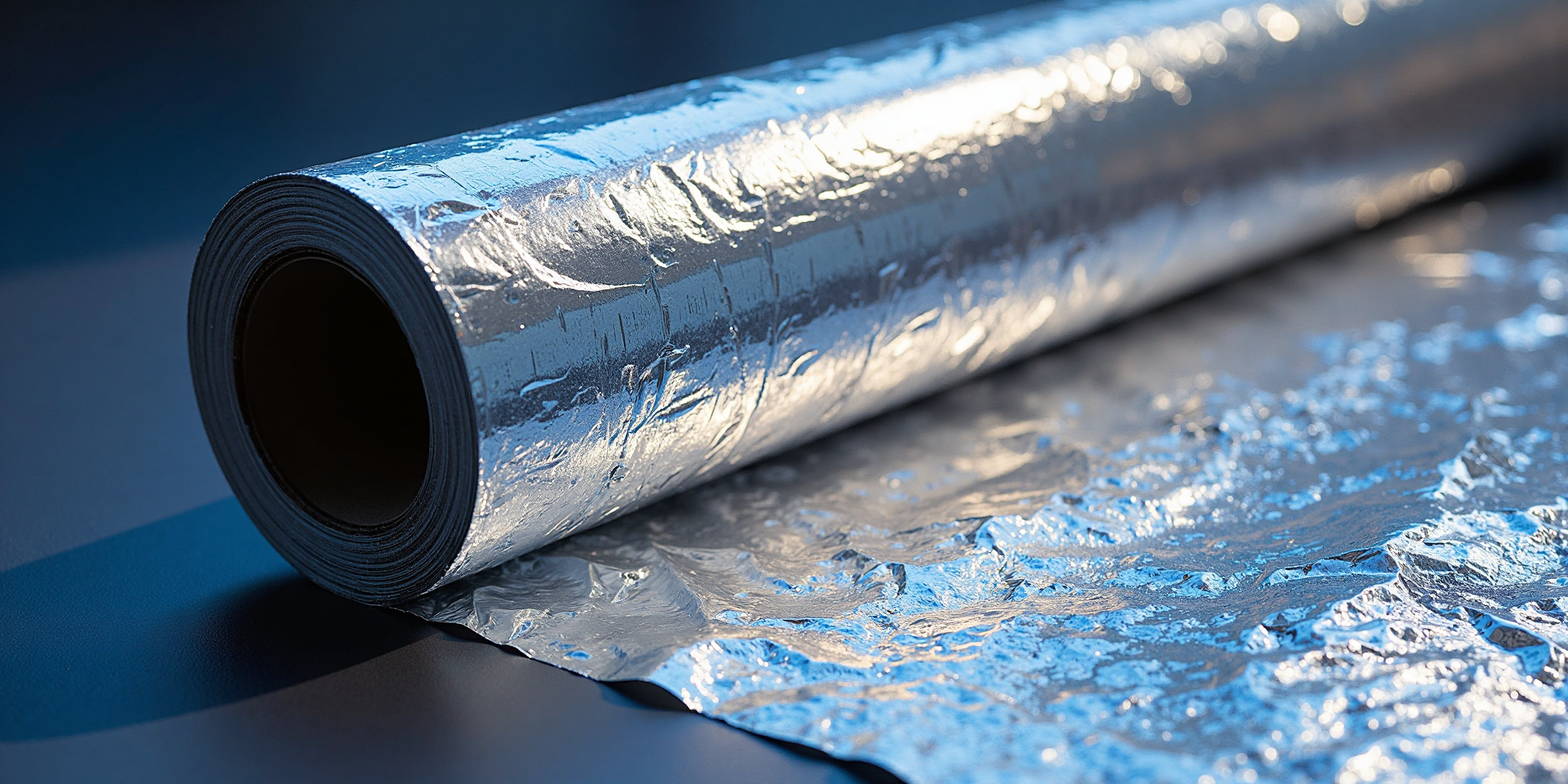
Temper selection directly affects how the foil behaves in the press or laminator, so it is worth confirming the intended operation before fixing the specification.
What to specify when ordering
- Alloy — 1060 for higher purity; confirm if a different grade is required for your process.
- Temper — state the condition, such as O, H14, H18 or H22.
- Thickness — give the nominal gauge and any tolerance band your line can accept.
- Width — specify the finished roll width, core diameter and roll weight you need.
Providing these four details together allows the roll to be matched to your converting equipment and avoids adjustments at the production stage.
More from this series