1000 Series
1235 Aluminium Foil
1235 aluminium foil is a 1000-series industrial pure aluminium foil with roughly 99.35% aluminium content, offering good electrical and thermal conductivity, excellent formability and consistent surface quality. It is supplied in O and H tempers from 0.006 mm to 0.2 mm and is typically used for flexible composite packaging, lidding stock, insulation facing and general converting. Its balanced purity and strength make it a practical choice where 1050 or 1060 alone does not match the required conversion performance.
Overview
1000 Series · 1235 Aluminium Foil
What 1235 Aluminium Foil Is
1235 aluminium foil belongs to the 1000 series of industrial pure aluminium alloys. With an aluminium content of approximately 99.35%, it keeps the characteristic softness, brightness and corrosion resistance of unalloyed aluminium while remaining straightforward to roll down to thin gauges.
The alloy is available in O (annealed) and H (work-hardened) tempers, with thickness spanning 0.006 mm to 0.2 mm. That range covers the light gauges used for flexible packaging as well as the heavier foils used for semi-rigid lidding and insulation facing.
1235 vs 1050 vs 1060: Purity and Strength
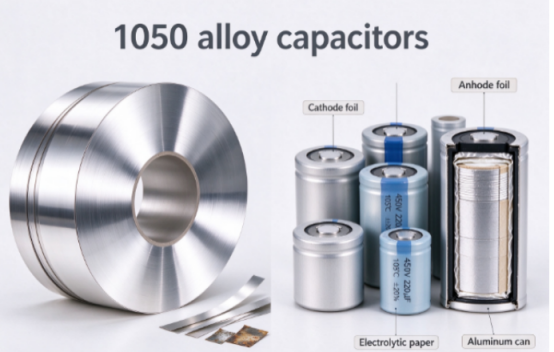
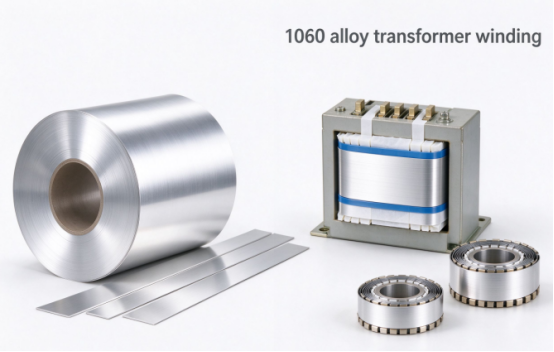
1050 and 1060 are also 1000-series pure aluminium grades, but they sit at different purity levels. 1050 is specified at a minimum aluminium content of 99.5%, while 1060 requires 99.6%. 1235 is the lower-purity grade at roughly 99.35%, which leaves slightly more room for trace elements within the same family.
In practice, the difference shows up as a trade-off rather than an absolute advantage. Higher-purity 1050 and 1060 foils are favoured when maximum conductivity or the softest annealed behaviour is the priority. 1235 generally offers a little more strength in the same temper and behaves predictably through rolling, which can be helpful when the foil has to survive coating, lamination and printing without losing its shape.

Surface Quality and Conversion Performance
1235 foil is produced with a clean, uniform surface that supports downstream processes. Consistent flatness and gauge tolerance help avoid wrinkles and tension problems during unwinding, coating and lamination, while the bright finish provides a reliable base for printing and adhesive bonding.
Typical Applications
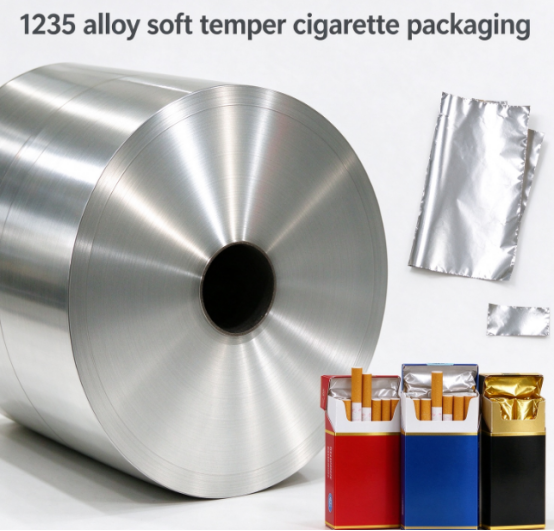
The alloy is commonly used for flexible composite packaging, where it acts as a barrier layer in multi-material structures. It is also used for lidding and closure stock, insulation facing, and general conversion work where the foil is slit, coated or laminated before reaching the final product.
Formability and Handling
Because 1235 combines good elongation with moderate strength, it can be bent, folded and shaped without cracking at normal converting thicknesses. Annealed O temper gives the softest handling for deep forming, while H tempers provide the stiffness needed for flat, self-supporting foil applications.
Selection Conclusion
Choose 1235 aluminium foil when you need a 1000-series pure aluminium foil with roughly 99.35% aluminium, thickness from 0.006 mm to 0.2 mm, and a surface engineered for composite packaging, lidding, insulation and conversion. If the application demands the highest available purity or the softest possible annealed foil, compare 1050 or 1060 first; if a balanced combination of purity, strength and conversion behaviour is the priority, 1235 is the practical selection.
More from this series